Green Careers Are Growing: New Ways for Young Canadians to Enter the Environmental Workforce
Nov-12, 2026
By Admin
Environmental careers are no longer limited to scientists working in laboratories or specialists studying wildlife. Across Canada, the shift toward cleaner energy, sustainable communities, climate adaptation, and responsible resource management is creating new possibilities for young people who want meaningful work. From renewable energy and environmental construction to conservation, waste reduction, and climate-related services, the environmental workforce includes a wider range of roles than many job seekers realize.
For young Canadians entering the labour market, this growing field offers an opportunity to build practical skills while contributing to issues that affect communities every day. You do not necessarily need an advanced degree or years of experience to take your first step. Many career paths begin with entry-level work, short-term training, apprenticeships, seasonal positions, or paid placements.
Why Environmental Careers Are Gaining Attention
Canada is facing important environmental challenges, including changing weather patterns, rising energy needs, pressure on natural resources, and the need to make buildings and transportation systems more sustainable. Governments, businesses, property owners, and communities are exploring ways to reduce environmental impacts and prepare for future conditions.
These changes create demand for people who can install equipment, maintain infrastructure, collect environmental data, support conservation projects, improve energy efficiency, and help organizations follow environmental standards.
For young workers, this means environmental employment is not one single career path. It is a broad sector that combines technical skills, outdoor work, construction, customer service, administration, research, and community involvement.
Renewable Energy Offers Practical Career Opportunities
Renewable energy is one of the most visible areas of Canada's environmental transition. Solar, wind, hydroelectricity, and other cleaner energy technologies require workers to help build, operate, inspect, and maintain equipment and supporting infrastructure.
Young people interested in hands-on work can explore roles such as:
- Solar panel installation assistant
- Electrical or mechanical apprentice
- Wind energy maintenance assistant
- Energy project labourer
- Equipment inspection support worker
- Renewable energy customer service representative
Some positions require specialized qualifications, safety training, or apprenticeship experience. However, entry-level support roles can help newcomers understand the industry and develop relevant skills. A willingness to learn, attention to safety, and basic technical knowledge can be valuable starting points.
Environmental Construction and Building Efficiency
Buildings use significant amounts of energy, making energy-efficient construction and renovation important parts of Canada's sustainability efforts. Improving insulation, upgrading heating and cooling systems, installing efficient lighting, and reducing energy waste all require skilled workers.
Young Canadians interested in construction or skilled trades can investigate opportunities connected to:
- Insulation and weatherproofing
- Energy-efficient heating and cooling systems
- Building maintenance and retrofits
- Efficient lighting installation
- Water conservation systems
- Sustainable building materials
These roles can provide a route into skilled trades while allowing workers to contribute to more efficient homes, workplaces, and public buildings. Apprenticeships and practical training can help young job seekers build experience over time.
Conservation and Outdoor Work Beyond the City
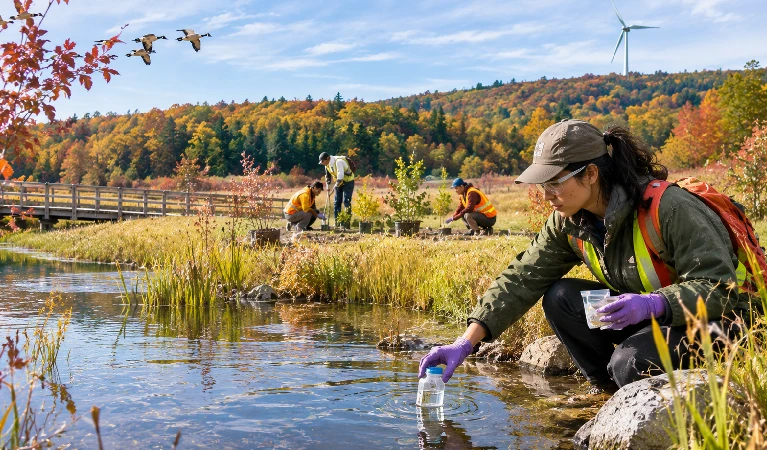
Not every environmental career takes place on a construction site or inside an office. Canada's forests, lakes, rivers, coastlines, parks, and natural habitats need ongoing care. Conservation-related work can appeal to young people who enjoy outdoor environments and want to contribute to protecting natural spaces.
Possible starting points include:
- Trail and park maintenance
- Tree planting and habitat restoration
- Wildlife monitoring assistance
- Water and soil sample collection
- Invasive plant removal projects
- Environmental fieldwork support
Some of these positions are seasonal, while others may be connected to longer projects. Outdoor roles can involve physical activity, travel, changing weather, and safety requirements. They can also help workers develop teamwork, observation, equipment-handling, and fieldwork skills.
Waste Reduction and the Circular Economy
Environmental employment also includes finding better ways to use materials and reduce waste. Recycling, repair, reuse, composting, and responsible resource management are important parts of a more sustainable economy.
Young job seekers may find opportunities in recycling facilities, waste collection services, repair businesses, material recovery operations, and community waste-reduction projects.
Entry-level responsibilities might include sorting materials, checking incoming items, assisting with collection operations, maintaining work areas, supporting inventory, or helping customers understand recycling and reuse options. These roles can develop practical knowledge of logistics, operations, safety procedures, and environmental practices.
Climate Adaptation Is Creating New Areas of Work
Communities across Canada are also working to prepare for environmental risks such as flooding, extreme heat, wildfires, and severe storms. Climate adaptation involves improving infrastructure, protecting natural areas, preparing emergency plans, and helping communities respond to changing conditions.
This work can involve several different occupations, including landscaping, drainage maintenance, environmental inspection, emergency support, tree management, and infrastructure maintenance.
Young people may be able to enter this area through paid internships, community projects, seasonal employment, or practical training. Some youth employment initiatives also support paid placements connected to climate action and emergency management. Job seekers should check current eligibility requirements, placement dates, and participating employers before applying.
Skills That Can Help You Enter the Environmental Workforce
You do not need to know everything about environmental science before applying for your first opportunity. Employers often look for a combination of practical abilities, reliability, and interest in learning.
Consider developing the following skills:
- Health and safety awareness: Understanding workplace procedures is especially important in construction, outdoor work, and equipment-related roles.
- Basic technical knowledge: Familiarity with tools, measurements, electrical concepts, equipment, or digital applications can be useful.
- Communication: Environmental projects often involve working with supervisors, customers, contractors, and community members.
- Problem-solving: Workers may need to identify practical ways to reduce waste, improve processes, or respond to unexpected conditions.
- Teamwork: Many environmental projects depend on people completing different tasks safely and efficiently.
- Adaptability: Outdoor and project-based roles can involve changing schedules, locations, and working conditions.
Short courses, introductory workshops, safety certificates, and hands-on volunteering can help demonstrate your interest. Choose training that matches the type of work you want to pursue rather than collecting qualifications without a clear goal.
Finding Paid Environmental Opportunities in Canada
Finding a first opportunity can take time, especially when you have limited work experience. A focused search can make the process more manageable.
Start by exploring job postings in your region using terms such as renewable energy assistant, environmental technician trainee, conservation worker, solar installation helper, recycling operations worker, and sustainability assistant. Search beyond major cities because conservation, infrastructure, and renewable energy projects may be located in smaller communities and rural areas.
It is also worth checking:
- Municipal and provincial employment pages for parks, maintenance, conservation, and environmental projects.
- Apprenticeship and trade training resources for energy-efficient construction and electrical work.
- College and community training programs offering environmental or technical certificates.
- Seasonal recruitment opportunities connected to parks, tree planting, land restoration, and outdoor maintenance.
- Paid youth employment placements and internships focused on climate action or emergency preparedness.
When reviewing a position, confirm whether it is paid, what qualifications are required, where the work takes place, and whether transportation or equipment is provided. If a role requires a certificate or licence, check the exact requirement before spending money on training.
Building Experience When You Have Never Worked in the Sector
A lack of direct environmental work experience does not mean you cannot get started. Think about skills you have developed through school projects, community activities, part-time jobs, or personal interests.
For example, helping organize a community cleanup can demonstrate initiative and teamwork. Working in retail can show customer service and communication skills. Participating in a school science project may demonstrate research, observation, and data-handling abilities. Experience using tools or maintaining equipment can also be relevant to certain entry-level roles.
Include these examples on your resume and explain what you actually did. Rather than simply stating that you care about the environment, describe a practical activity that shows your interest. If possible, create a small portfolio with photographs of completed projects, relevant coursework, or examples of practical work.
When applying, tailor your resume to the position. Highlight safety awareness for field or construction roles, technical skills for equipment-related positions, and communication abilities for public-facing work. A short, clear explanation of why you are interested in the role can also help employers understand your motivation.
Making a Realistic Start in a Growing Field
Environmental employment can be rewarding, but it is important to approach it with realistic expectations. Not every green job is available in every community, and some careers require years of education, licensing, or specialized experience. Other positions may be seasonal, project-based, or physically demanding.
Before choosing a career direction, research local employers, typical job duties, wages, training requirements, and future opportunities. Speak with instructors, career advisers, apprenticeship representatives, or people already working in the field. Their experiences can help you understand what an ordinary workday looks like.
Start with an achievable next step. That could mean completing a relevant safety course, applying for a seasonal conservation position, exploring an apprenticeship, or gaining experience through a community environmental project. Small steps can help you discover which part of the sector suits your interests and abilities.
Conclusion
Canada's environmental workforce offers young people more possibilities than traditional ideas about green careers might suggest. Renewable energy, efficient construction, conservation, recycling, and climate adaptation all depend on workers with different backgrounds and skill levels.
For young Canadians looking to begin a career, the best approach is to explore the options available locally, identify the skills employers need, and build experience through practical opportunities. You do not have to begin with a perfect resume or a fully established career plan. A paid entry-level position, apprenticeship, seasonal role, or training opportunity can provide a valuable first step.
With preparation, patience, and a willingness to learn, young job seekers can find meaningful ways to contribute to Canada's environmental future while building skills for a lasting career. Exploring Youth Jobs Canada can also help you stay focused on employment opportunities and take the next step toward your goals.